
Timeline to Renovate Office With Minimal Downtime
A compressed timeline can reduce downtime but requires tight coordination. Riley Riley Construction builds schedules that align trades and deliveries. Call 17207828897 to plan a timeline that protects operations. We balance speed with quality control to meet goals.
Compressing a renovation schedule to protect ongoing operations is a strategic decision that saves money and preserves productivity, but it also demands precise execution. At Riley Riley Construction, we design timelines that consider every material delivery, trade overlap, and inspection milestone in order to minimize the period your office is unavailable. A compressed timeline to renovate office with minimal downtime isn't simply about working faster; it's about working smarter, sequencing work to avoid bottlenecks and ensuring contingency plans are ready.
Clients often assume a faster renovation automatically increases risk; that doesn't have to be true. With disciplined planning, robust communication, and experienced crews, a shortened schedule can be delivered with equal or better quality than a standard timeline. We begin with a realistic assessment of existing conditions, procurement lead times, and operations that must continue. The result is a schedule that balances speed, safety, and quality to meet your targets and protect business continuity.
Planning and scheduling strategies for minimal downtime
Effective planning is the foundation of any timeline to renovate office with minimal downtime. The first step is a detailed work breakdown that identifies critical-path activities and tasks that can run in parallel without interfering with operations. This includes early decisions about finishes and fixtures, procurement windows, and necessary permits. By locking down long-lead items early and building a dynamic schedule with float assigned strategically, you reduce surprises and ensure predictable progress during compressed phases.
We also create phased work plans that isolate construction zones and define clear boundaries for noise, dust, and pedestrian flows. Phasing allows partial occupancy and targeted closures rather than a full shutdown, which reduces business disruption. A typical phased plan identifies nights, weekends, and off-peak times for intrusive activities, allowing staff to continue core functions during prime hours. This approach requires strong coordination with facility managers and tenant representatives to align expectations and access needs.
Another key scheduling strategy is the use of buffer windows and contingency days for inspections and unexpected repairs discovered during demolition. While compressed schedules appear lean, they should never eliminate necessary safety checks or quality inspections. We schedule specific hold points for city inspections, HVAC testing, and system commissioning so that milestones are validated before the next phase starts. This protects both the timeline and the final outcome.
Coordinating trades and deliveries
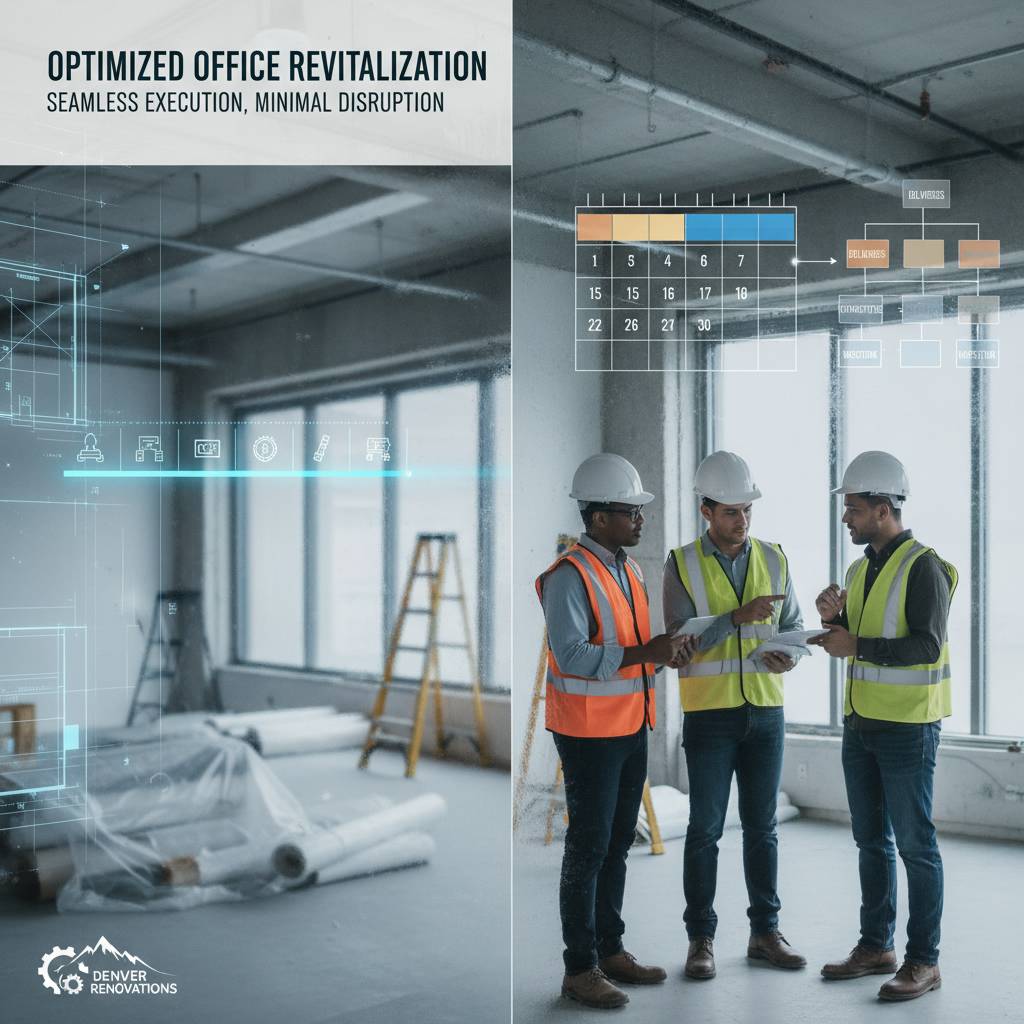 Coordination of trades and deliveries is the heartbeat of a compressed renovation. Work cannot progress unless the right crew and materials are in the right place at the right time. We put considerable effort into trade sequencing, identifying overlaps that are efficient and overlaps that create conflicts. For example, electrical rough-in should be coordinated immediately after structural adjustments and before drywall installation. Deliveries are time-windows, not drop-offs: they are scheduled against the contractor's daily plan and staged to minimize footprint and rework.
Logistics, staging, and just-in-time delivery
Just-in-time (JIT) delivery reduces on-site storage needs and potential damage, but it demands tight supplier relationships and contingency alternatives. JIT works best when procurement teams track lead times for long-lead items and maintain backup vendors for mission-critical pieces. We also plan staging zones and secure storage for high-value items so that product integrity and site safety are preserved, reducing downtime caused by misplaced or damaged materials.
For trades coordination, daily huddles and shared digital schedules are invaluable. Field teams should have access to a living schedule that highlights the day's trade responsibilities, access constraints, and inspection requirements. We use collaborative platforms to keep everyone informed of changes in real time, reducing misunderstandings that can cascade into lost days. Clear on-site points of contact and escalation protocols further ensure that if a conflict arises, decisions are swift and documented.
Minimizing operational impact during work
Protecting ongoing operations is the priority when compressing a renovation timeline. That means managing noise, air quality, utilities, and occupant access so the business can continue functioning. Acoustic barriers, negative air containment, and temporary HVAC segregation are common controls that allow hazardous or disruptive work to proceed without contaminating occupied areas. We coordinate with building operations to isolate systems and schedule any necessary shutdowns during low-impact windows.
Maintaining productivity and occupant comfort
Even with physical protections in place, employees can be affected by vibrations, lighting changes, and altered circulation. We recommend temporary workspace solutions - such as relocation of departments to unaffected areas, privacy enclosures, and temporary IT extensions - to keep critical functions running. Communication with staff about schedules and what to expect reduces frustration; signage and a single-point hotline for occupant concerns ensure issues are addressed quickly. These human-centered measures are as important as technical mitigations in protecting productivity.
When operations cannot be fully maintained, we create continuity plans that either shift workload to remote locations or adjust business hours for essential teams. This can include night-shift construction with daytime occupancy or weekend-intensive work that compresses the calendar while respecting staff and client needs. Each option is evaluated against cost, safety, and the client's tolerance for change so the chosen approach preserves both momentum and morale.
Quality control, safety, and risk management
Speed must not trump quality. A compressed timeline still needs robust quality control (QC) processes at every phase. We build QC checkpoints into the schedule, assigning responsibility for verification to independent inspectors or third-party commissioning agents where appropriate. These hold points ensure that systems are installed to specification and that corrective actions are taken immediately, preventing rework that would otherwise prolong downtime significantly.
Safety measures are non-negotiable on accelerated projects. Compressed schedules often mean more trades on site simultaneously, and without strict safety protocols, the risk of incidents increases. We enforce daily safety briefings, clear access routes, and enforcement of personal protective equipment. Additionally, emergency response plans and first-aid resources are pre-positioned. Risk registers are maintained and reviewed weekly to identify emerging threats and mitigation strategies.
Insurance, warranty, and contractual protections also deserve attention when timelines are shortened. Contract language should clearly define scope, penalties for delays, and acceptance criteria for completed work. This reduces disputes and creates financial alignment across stakeholders. We recommend allocating a contingency that reflects the compressed nature of the schedule - often a smaller time contingency but appropriate financial buffer to cover overtime, expedited shipments, and unexpected repairs.
Tools and technologies that enable faster delivery
 Modern tools make compressed timelines achievable without sacrificing quality. Building Information Modeling (BIM) allows clashes to be detected in the planning phase rather than on site; prefabrication off-site accelerates on-site assembly; and modular components reduce dependency on weather and site constraints. We leverage digital scheduling tools to visualize critical paths, track procurement status, and manage change orders efficiently so decisions are informed and timely.
Prefabrication and modular construction can dramatically reduce on-site labor hours and the likelihood of rework. When wall systems, MEP pods, or millwork are built in controlled environments, quality is more consistent and installation times are shorter. This is especially useful for repetitive office fit-outs where multiple floors or similar workstreams are happening concurrently. We evaluate which elements benefit from factory-built solutions and integrate these into the compressed schedule.
Real-time communication platforms and a centralized document repository are also essential. When architects, engineers, contractors, and facilities staff work from the same updated drawings and schedules, mistakes are caught early. Digital punch lists and photo documentation speed up deficiency resolution and provide a reliable record for commissioning and turnover. These small efficiencies add up and are vital for preserving a tight timeline.
Checklist and a practical comparison
To help decision-makers quickly assess feasibility, here is a concise checklist of actions that make a compressed timeline to renovate office with minimal downtime realistic and reliable. These items are not exhaustive but represent the high-impact activities that should be prioritized during preconstruction and execution.
- Lock long-lead items and order early (fixtures, specialty equipment).
- Create phased work zones and limit access to active construction areas.
- Schedule intrusive work for off-hours and high-impact activities for weekends.
- Use prefabrication for repetitive or high-risk assemblies.
- Maintain daily coordination meetings and real-time schedule updates.
- Designate single points of contact for operations and occupants.
- Include contingency days and account for inspection windows.
- Implement robust QC and safety protocols with regular audits.
| Attribute | Standard Timeline | Compressed Timeline |
|---|---|---|
| Typical Duration | 6-12 months for medium projects | 3-6 months with intensive coordination |
| Labor Intensity | Lower day-to-day intensity | Higher intensity; more concurrent trades |
| Cost Considerations | Baseline contractor rates | Possible premium for overtime and expedited materials |
| Risk of Rework | Moderate | Managed low if QC is enforced |
| Operational Downtime | Longer phased closures | Shorter overall closure with planned outages |
Case examples, FAQs, and next steps
Real-world examples illustrate how a compressed timeline can succeed. In one office fit-out, we completed a full-floor renovation in eight weeks by staging wall finishes and using modular desks preassembled off-site. Occupants were moved only for two weekends while HVAC and power were rerouted, allowing normal operations during weekdays. A clear staging plan, JIT deliveries, and an on-site logistics manager were key contributors to success in that project.
Frequently asked questions often revolve around cost and risk. Yes, compressed timelines can carry a cost premium for overtime and expedited shipping, but these expenses are frequently offset by preserved revenue and the avoidance of a prolonged disruption. Risk decreases when QC checkpoints are non-negotiable and when trades coordination is centralized and enforced through daily communication and strong project leadership. Having or a dedicated project manager as a single point of accountability can make a material difference in outcomes.
Next steps for organizations considering an accelerated approach typically involve an initial feasibility study, a short procurement plan to identify long-lead items, and a stakeholder agreement that outlines access and acceptable impacts. We can produce a high-level compressed timeline draft within days and a detailed phased schedule within two to three weeks after surveys and permit reviews. That plan becomes the living document for execution and is updated weekly or more frequently as needed.
Short call-to-action and contact
If you need to renovate with minimal downtime, let Riley Riley Construction map out a timeline that protects your operations while preserving quality. We combine planning rigor with practical field expertise to keep your teams working and your business serving clients.
To discuss a tailored schedule and phased plan, contact Riley Riley Construction today at 17207828897. Our team will provide an initial assessment and recommend next steps to balance speed with reliable long-term performance.