
Open-Plan Redesign Compared to Private Offices ROI
Open plan redesigns have different ROI profiles than private office configurations
Organizations considering a move from traditional private offices to an open-plan layout face an important strategic decision: how will the change affect productivity, employee satisfaction, and the bottom line? Riley Riley Construction analyzes needs and models financial outcomes for each layout, helping leaders understand where value is created and where trade-offs arise. A clear evaluation connects workplace design choices to measurable metrics such as utilization, rent per person, and turnover costs.
When we start an engagement, our first step is to align the workplace strategy with core business objectives-whether that's reducing occupancy spend, boosting collaboration-driven innovation, or improving employee retention. Those objectives determine which ROI levers matter most. For some teams, the modest gains in real estate efficiency from an open plan justify the investment; for others, the privacy gains from private offices preserve productivity and client confidence.
Deciding between layouts is rarely binary. Instead, the most robust outcomes come from modeling multiple scenarios: full open-plan, mixed-mode with touchdown zones and small suites, or enhanced private office configurations with shared collaboration hubs. Our goal is to quantify outcomes so leaders can choose a path that fits culture and budget while maximizing long-term productivity and space efficiency.
Key ROI drivers to evaluate
ROI for workplace redesigns is driven by a mix of hard and soft metrics. Hard metrics include immediate capital costs, ongoing rent or occupancy costs, furniture and technology expenditures, and the expected change in headcount density. Soft metrics are equally important and include employee engagement, cross-team collaboration, and the cost of distractions or lost focus. A complete model weighs both types and assigns realistic timeframes for when benefits will materialize.
Three primary drivers tend to dominate the analysis: utilization, productivity per employee, and staff turnover. Higher utilization reduces rent and can lower cost per person by shifting to more flexible seating arrangements. Productivity per employee captures the net change in output attributable to design-some roles benefit from an open-plan environment while others require enclosed focus. Turnover affects hiring and training costs, so any design that influences retention must be captured in the forecast.
Risk factors also shape ROI. Transition costs, adoption resistance, acoustic and privacy issues, and the need for additional support spaces can erode savings if not anticipated. will often model a conservative adoption curve where benefits phase in over 12-36 months, then test sensitivity to downside scenarios. This approach prevents overestimating payback periods and makes financial outcomes more dependable for board-level decisions.
Comparing productivity and space efficiency
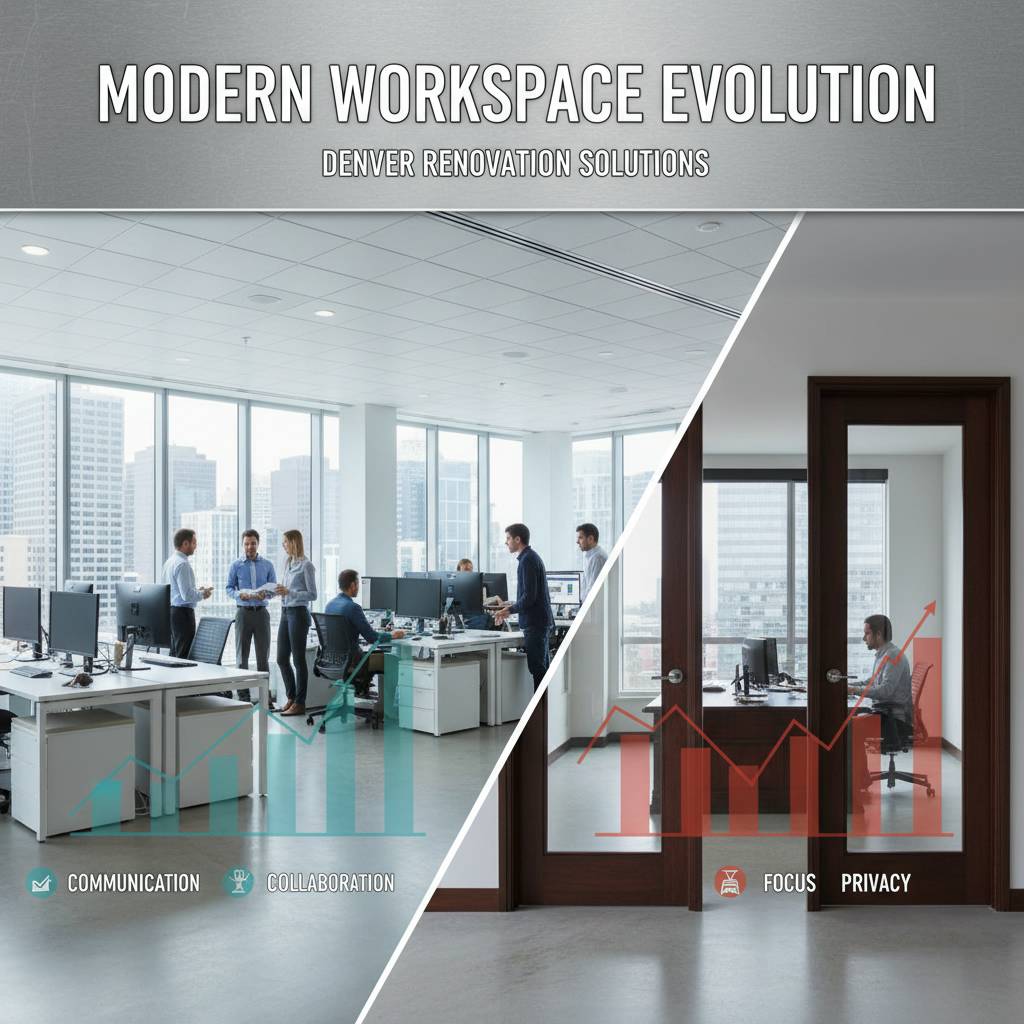 Open-plan redesign compared to private offices ROI depends heavily on how productivity effects are modeled. Some empirical studies show collaboration increases in open settings, especially for teams that rely on spontaneous interactions and rapid iteration. Conversely, knowledge workers who need sustained focus may experience productivity declines without adequate quiet zones. Modeling must therefore start with a solid understanding of job functions, meeting frequency, and the existing culture around collaboration versus heads-down work.
Space efficiency is where open plans often deliver clear financial advantages. By reducing average square feet per person, companies can either lower their leased footprint or reallocate space to shared amenities that enhance employee experience. Those benefits can be expressed as a direct reduction in rent expense or as an opportunity to invest saved capital in higher-impact areas like talent development or technology.
| Metric | Open-plan | Private offices |
|---|---|---|
| Average space per person | 10-12% lower on average | Higher; depends on office size |
| Collaboration potential | High for cross-functional teams | Low to moderate without shared hubs |
| Acoustic/privacy concerns | Higher risk, needs mitigation | Lower risk; built-in privacy |
| Typical ROI timeframe | 12-36 months (if adoption succeeds) | Varies; often longer to recoup renovation costs |
This table is illustrative; precise values differ by industry, geography, and organizational behavior. When we build financial models, we convert these qualitative observations into quantifiable inputs such as net change in productive hours per employee, percentage change in utilization, and the expected impact on turnover rate. That allows a side-by-side comparison of net present value and payback period for each layout option.
Cost components and budget ranges
Transparent cost accounting is essential. Typical cost categories include demolition and construction, HVAC and acoustic improvements, furnishings and workstations, AV and connectivity upgrades, and change management expenses such as training and temporary relocation. Each category can vary widely: a partial reconfiguration with modular furniture might run $75-$200 per person for furnishings, while a full build-out to add enclosed meeting pods and upgraded mechanical systems can scale much higher.
Operating costs matter too: maintenance, janitorial services, and facility management may change after a redesign. Open plans often increase the need for frequent cleaning and higher-capacity HVAC as density increases. Conversely, consolidating into a smaller footprint can reduce monthly rent and utilities. Our modeling includes a three- to five-year operating budget to capture ongoing costs and savings, ensuring decision makers understand both one-time and recurring financial implications.
It is also important to budget for behavioral interventions and technology that support the new layout. Booking systems, noise masking, privacy solutions, and training programs typically represent 5%-15% of the total project budget but are disproportionately effective at reducing adoption risk. Riley Riley Construction recommends allocating funds for these enablers up front to maximize the chance that measured productivity gains are realized.
Modeling scenarios and sensitivity analysis
A strong financial model presents multiple scenarios: conservative, base case, and optimistic. The conservative scenario assumes slower adoption, modest productivity changes, and potential uplift in turnover due to resistance. The base case reflects expected outcomes based on historical data and sector benchmarks. The optimistic case assumes quick cultural alignment and larger-than-expected collaboration gains. Comparing these scenarios illuminates whether a project is robust to variation in key assumptions.
Sensitivity analysis identifies which inputs matter most. Often the three parameters with the greatest influence are: change in productive hours per employee, the degree of space consolidation achievable, and the impact on voluntary turnover. By varying these inputs across realistic ranges, decision makers can see when the project remains attractive and when it becomes marginal. This quantitative transparency reduces reliance on anecdote and allows leadership to choose risk-tolerant or risk-averse strategies accordingly.
We recommend a staged decision process. Start with a pilot or phased rollout evaluated against pre-defined KPIs such as utilization, employee satisfaction, and meeting frequency. Use pilot results to recalibrate the full-scale model-this reduces the chance of costly large-scale missteps and provides evidence that can be communicated to employees and stakeholders to build confidence in the chosen direction.
Implementation best practices and culture fit
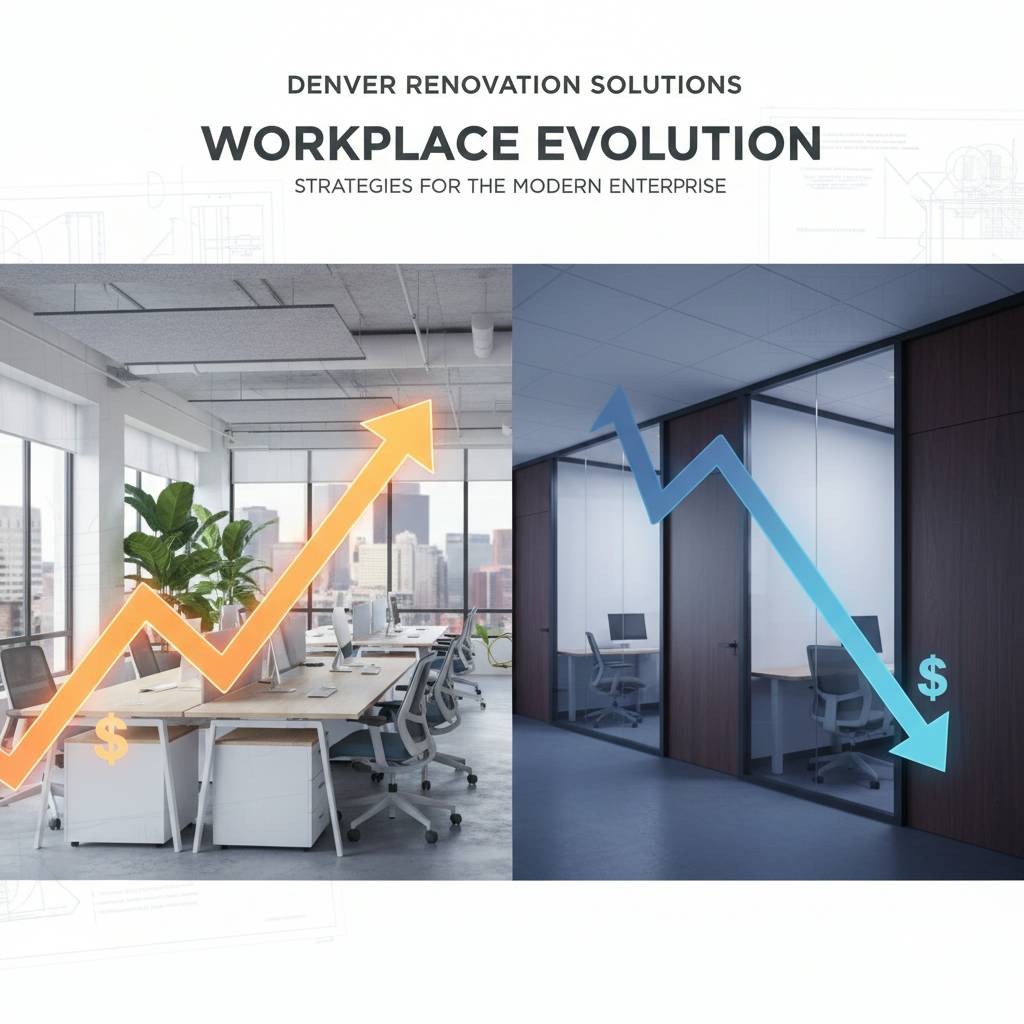 Design decisions should reflect culture, not override it. Open-plan redesign compared to private offices ROI often hinges on whether the new environment supports how people actually work. Invest time in behavioral mapping: where do projects get done, where do informal interactions happen, and what contexts require privacy? Understanding these workflows ensures the redesign amplifies the organization's strengths and compensates for weaknesses.
Practical best practices include creating a balanced mix of spaces-focus rooms, collaboration hubs, small private offices for confidential meetings, and touchdown areas for hybrid workers. Acoustic treatments and bookable rooms should be prioritized early because they address the most common pain points. In many cases, a hybrid model delivers the best ROI: maintain a subset of private offices for heads-down work while using open-plan zones to accelerate cross-team innovation.
Change management is non-negotiable. Clear communication, employee involvement in design decisions, and phased timelines reduce pushback. Training managers to lead distributed work patterns and investing in meeting norms are relatively low-cost actions with high returns. When behavior and environment align, organizations are more likely to realize the projected gains in productivity and space efficiency.
Case studies, practical examples, and decision checklist
Consider a mid-sized professional services firm that reduced its footprint by 18% after introducing an open-plan redesign with dedicated quiet rooms and enhanced client meeting suites. The firm reinvested a portion of rent savings into professional development and technology, producing an estimated payback period of 20 months. In contrast, a healthcare research team that requires deep concentration kept private offices for senior researchers while building shared collaboration labs-this hybrid approach preserved focus and delivered modest cost savings without disrupting research outcomes.
These examples show that context matters. To guide decisions, use a concise checklist to evaluate readiness and expected ROI:
- Identify primary work modes: collaboration, focus, client-facing, or creative.
- Measure current utilization and occupancy patterns over several weeks.
- Estimate productivity impact by role type and translate into hours or deliverables.
- Quantify turnover and hiring costs to capture retention effects.
- Budget for acoustics, booking systems, and change management.
- Plan a pilot phase with KPI tracking and contingency plans.
This decision checklist helps teams move from abstract preferences to evidence-based choices. Riley Riley Construction uses this kind of structured framework to create tailored financial models and to recommend a path-whether full open-plan, private offices with enhanced shared spaces, or a carefully calibrated hybrid.
Frequently asked questions and closing guidance
How long before ROI becomes visible? Typical payback windows run from 12 to 36 months depending on the scale of construction, the degree of consolidation, and how quickly employees adopt new behaviors. Projects that pair physical change with robust change management tend to achieve results on the faster end of that range.
Will open-plan always be cheaper? Not necessarily. Upfront fit-out costs, investments in acoustic treatments, and even higher operational expenses due to density can offset savings. The differentiator is whether space can be meaningfully consolidated and whether productivity effects are neutral or positive. That's why a detailed financial model is essential before committing.
If you're unsure which layout fits your culture and budget, Riley Riley Construction can evaluate your specific situation and model the financial outcomes for each approach. We focus on productivity and space efficiency, and we present clear scenario analyses so you can choose a solution that supports both people and the bottom line.
Next steps: Schedule a consultation to have our team analyze utilization data, model potential savings, and forecast productivity impacts for the layouts you are considering. We will provide a clear comparison of open-plan redesign compared to private offices ROI, with recommendations tailored to your organization.
To evaluate which approach fits your culture and budget, call Riley Riley Construction at 17207828897 to arrange a needs assessment and financial modeling session. We look forward to helping you design a workplace that aligns strategy, people, and space.