
Step-by-Step Commercial Renovation Process for Businesses
Businesses benefit from a clear renovation process and timeline. Riley Riley Construction provides a step by step plan from assessment to handover. Call 17207828897 to receive a tailored project roadmap. We ensure stakeholders know milestones responsibilities and deliverables.
Effective commercial renovation is more than an aesthetic upgrade-it's a coordinated business decision that impacts operations, revenue, safety, and brand experience. At Riley Riley Construction, our goal is to deliver a practical, transparent, and repeatable approach so stakeholders understand what happens, when, and who is responsible. This page outlines a clear, step-by-step commercial renovation process for businesses, explains roles and milestones, and offers practical guidance for budgeting and scheduling.
Why a clear renovation process matters for businesses
A commercial renovation touches many parts of an organization: leadership, facilities, operations, tenants, and customers. Without an agreed process and timeline, projects drift, costs escalate, and business disruption increases. A structured approach reduces surprises and enables better decision-making at every stage of the work.
Concrete benefits of a predictable renovation process include:
- Minimized downtime: Coordination across teams reduces operational interruptions and helps maintain revenue streams.
- Cost control: Defined scopes, clear procurement, and staged approvals limit scope creep and unexpected charges.
- Stakeholder clarity: When responsibilities and milestones are communicated, each team knows deliverables and timelines.
- Quality assurance: Systematic inspections and agreed acceptance criteria ensure the final space meets business needs.
Whether you manage a single retail outlet or multiple corporate locations, a clear process is the foundation for predictable outcomes. It also improves vendor relationships and makes it easier to align the renovation with broader business objectives like reopening, rebranding, or expanding capacity.
Our step-by-step commercial renovation process for businesses
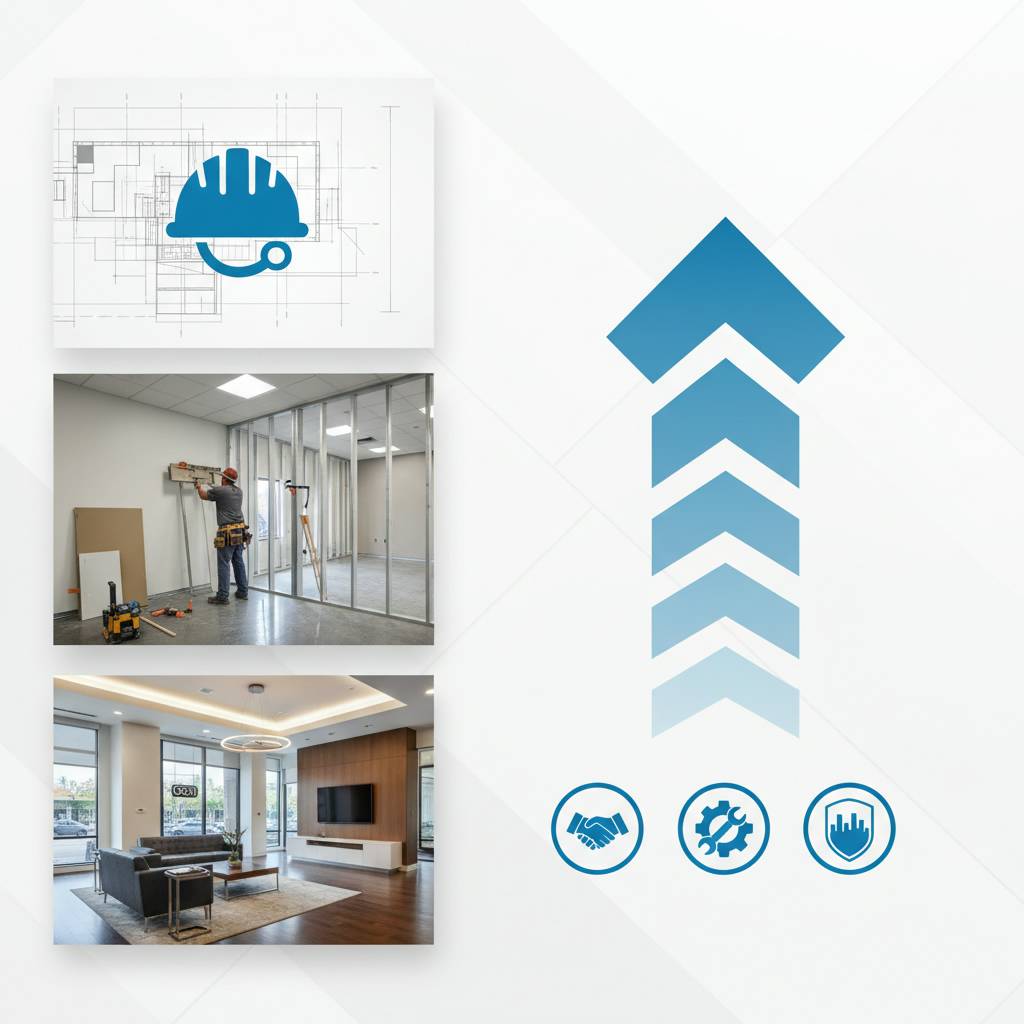 At Riley Riley Construction, we follow a structured sequence that begins with a thorough assessment and continues through design, construction, and handover. Each phase has specific deliverables and checkpoints so your project advances with clarity. Below is a high-level flow that can be tailored to different scales and sectors.
- Assessment & discovery
- Program and scope definition
- Design and approvals
- Procurement and pre-construction planning
- Construction and quality control
- Commissioning, handover, and closeout
- Post-occupancy support and warranty management
These steps are deliberately broad so they can be adapted for tenant fit-outs, full-floor refurbishments, hospitality overhauls, or industrial upgrades. For every project we create a customized roadmap that ties each step to dates, responsible parties, and measurable deliverables.
| Phase | Typical deliverables | Average duration |
|---|---|---|
| Assessment & Discovery | Site survey, constraints log, stakeholder brief | 1-3 weeks |
| Design & Approvals | Schematic designs, permit documents, budget update | 3-8 weeks |
| Procurement & Planning | Contractor bids, procurement list, phasing plan | 2-6 weeks |
| Construction | Milestone completions, inspections, quality checks | 4 weeks - 9 months |
| Handover & Closeout | Punchlist, manuals, as-built drawings, warranties | 1-4 weeks |
Assessment, planning, and scope definition
The first phase sets the tone for the entire renovation. A focused assessment documents existing conditions, identifies code or lease constraints, and captures stakeholder priorities. We interview facility managers, operations leaders, and end users so design decisions reflect real business needs rather than assumptions.
Scope definition turns qualitative ambitions into measurable tasks. This is where we define the program-what spaces are changing, what systems are impacted, and which trades are required. A well-constructed scope saves time during procurement and reduces the risk of unexpected change orders during construction.
Key planning deliverables
- Functional brief mapping business needs to space requirements
- Risk register with mitigation strategies
- High-level budget estimate and timeline window
- Phasing plan to maintain operations where needed
Budgeting at this stage is not final, but it sets expectations. We provide conservative and aggressive estimates so stakeholders can decide the level of finish, phasing strategy, and contingency. This transparency enables faster approvals and smoother transitions into design.
Design, permitting, and procurement
Design translates program requirements into buildable plans while balancing aesthetics, functionality, and regulatory compliance. During this phase we coordinate architects, engineers, and specialists to assess mechanical, electrical, structural, and accessibility requirements. Early coordination reduces rework and helps avoid costly permitting delays.
Permits are often the critical path for commercial renovations. We prepare the documentation required by local authorities, manage submissions, and respond to reviewer comments. Parallel to permitting, procurement strategies are developed to secure materials and trades at competitive rates with defined scopes and timelines.
- Design packages: schematic through construction documents
- Permit submissions and tracking
- Bid packages and contractor prequalification
- Long-lead items identified and ordered early
By separating design approvals from procurement milestones, businesses can avoid delays and ensure that critical items are available when construction begins. Clear contract terms, warranties, and payment schedules are negotiated to protect your interests and reduce contractor risk.
Construction, quality control, and transparent communication
 Construction is where the plan becomes reality, and strong project management keeps work aligned with schedule and budget. We implement a milestone-based approach with defined deliverables at each checkpoint. Regular site inspections and quality control checks help catch issues early while preserving the project's schedule.
Communication is essential during construction. Weekly progress reports, schedule updates, and budget reconciliations help stakeholders make informed decisions. When changes arise, a formal change-management process ensures cost and time impacts are clearly documented and approved before work proceeds.
Responsibilities and handoffs
Clear responsibility matrices prevent gaps in accountability. For example, operations teams may handle temporary services during construction while the contractor is responsible for site safety and material staging. Our project roadmaps specify who delivers each item, when handoffs occur, and what acceptance criteria must be met.
| Stakeholder | Typical responsibilities | Deliverable examples |
|---|---|---|
| Owner / Client | Approvals, final decisions, funding | Sign-off on scope, payment approvals |
| Project Manager | Schedule coordination, contractor management | Weekly reports, change logs |
| Contractor | On-site work, quality checks, safety | Milestone completions, as-built notes |
| Facilities / Operations | Site logistics, maintaining business continuity | Access plans, temporary service plans |
We also prioritize safety and compliance: daily toolbox talks, documentation of inspections, and adherence to all local regulations. These practices protect people and help maintain insurance and warranty coverage.
Timeline, budgeting realities, and cost control
Project timelines vary by scope, but accurate forecasting helps teams plan business operations around renovation milestones. We create phased schedules that outline critical dates like permit approvals, foundation or MEP cutovers, and final inspections. These schedules are realistic and include contingency time for weather, supply chain delays, and permitting reviews.
Cost control starts early and continues through construction. Typical cost categories include design fees, permits, contractor labor, materials, contingency, and soft costs such as temporary services or relocation. For benchmarking purposes, many commercial renovations fall within broad ranges depending on sector and finish level-always discussed and customized during the planning phase.
- Standard tenant fit-out ranges can start near $75-$200 per square foot depending on finishes and systems.
- Higher-end hospitality or healthcare projects include additional mechanical and specialty system costs.
- Contingency planning of 5%-15% is typical depending on project complexity.
Transparent procurement practices, fixed-price contracts where appropriate, and early ordering of long-lead items reduce the risk of cost escalation. We also track value-engineering opportunities that preserve design intent while lowering cost when needed.
Handover, closeout, and ongoing support
Handover is a critical moment when the renovated space must be ready for business. Our closeout process includes a coordinated punchlist, completion of commissioning for systems, delivery of as-built drawings, and transfer of warranties and manuals. Thorough training for facilities and operations staff reduces the learning curve and prevents early service calls.
Post-occupancy support is part of our commitment. We conduct a follow-up review after a set period to address any defects, revisit system performance, and capture lessons learned for future projects. This aftercare ensures warranties are honored and that the space continues to function as intended after occupancy.
Case example
A regional retail client engaged Riley Riley Construction for a two-store refresh with phased openings to avoid simultaneous closures. Our phased schedule and night-shift coordination reduced customer disruption. The project finished within the approved budget and the client reported a faster-than-expected sales rebound once both locations reopened. This outcome was a direct result of clear milestones and disciplined communication across teams.
Common questions businesses ask
How long will a typical renovation take? Duration depends on scope, permits, and whether operations must continue during work. Small tenant fit-outs can take 48 weeks, while full-floor renovations with MEP upgrades commonly range from 36 months. We provide tailored schedules during the planning phase.
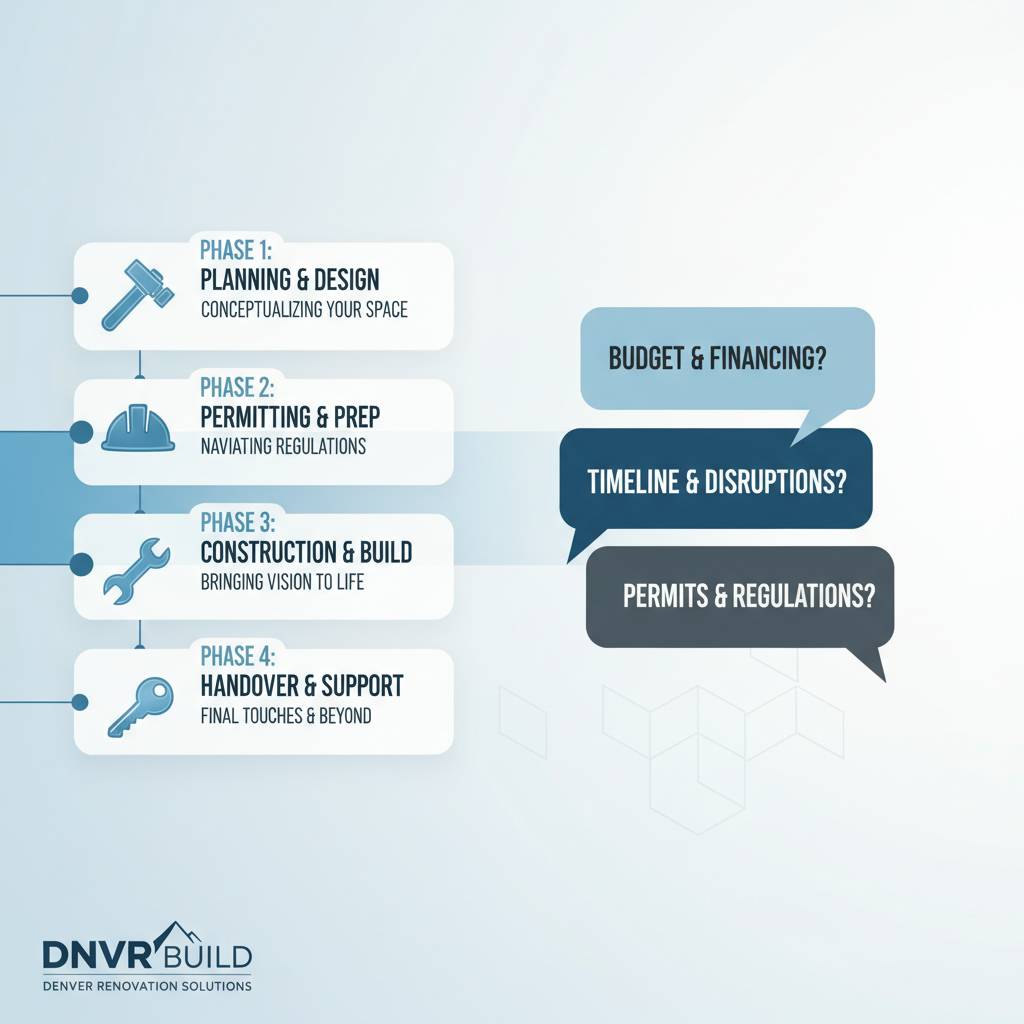
How do you limit business disruption? We create phasing and logistics plans, use off-hours work where feasible, set up temporary services, and sequence critical tasks to avoid interference with peak business times. Clear communication with staff and tenants is part of the strategy.
What happens if scopes change? A formal change-order process documents the nature of the change, cost impact, and schedule adjustment. That information requires client approval before work proceeds, protecting both the client and contractor from ambiguity.
Who manages permitting and code compliance? Riley Riley Construction coordinates permit-ready documents and manages submissions; we also track review comments and facilitate responses with design professionals. Final sign-offs are scheduled into the project timeline so they are not an afterthought.
Next steps and how we work with your team
If you're planning a renovation, the next best step is a focused assessment that produces a clear scope and timeline. Riley Riley Construction will meet with your stakeholders, perform a site review, and deliver a concise project roadmap with milestones, responsibilities, and a preliminary budget. That roadmap becomes the single source of truth for the project.
For many clients, this initial roadmap avoids months of uncertainty and positions the project for timely execution. If you prefer direct contact, ask for a phased proposal that aligns with your fiscal planning or tenant schedules-our flexible approach adapts to your operational needs.
To discuss a tailored plan for your facility, contact Riley Riley Construction at 17207828897. Whether you work with or another member of our team, we'll provide a clear roadmap that protects your operations, your budget, and your schedule.