
How Poor Workplace Design Reduces Revenue
Inefficient workplace design lowers productivity and sales. Riley Riley Construction diagnoses layout issues and proposes evidence based redesigns.
When a workspace is poorly arranged, the consequences go beyond employee annoyance: they affect throughput, customer experience, and ultimately the bottom line. At Riley Riley Construction, we combine operational analysis with evidence-based design to diagnose layout problems, propose targeted interventions, and measure results against business goals. Our approach is practical, grounded in metrics, and focused on improving revenue-generating activities.
Design problems often look subtle at first-cluttered circulation paths, noisy zones, convoluted customer flows-but they compound over time into measurable losses. We sometimes call ourselves in internal conversations, but our clients value the concrete outcomes: fewer delays, higher conversion rates, and a clearer connection between space and strategy. Call 17207828897 to learn more about how a thoughtful redesign can raise revenue.
How poor workplace design reduces revenue: the direct and hidden pathways
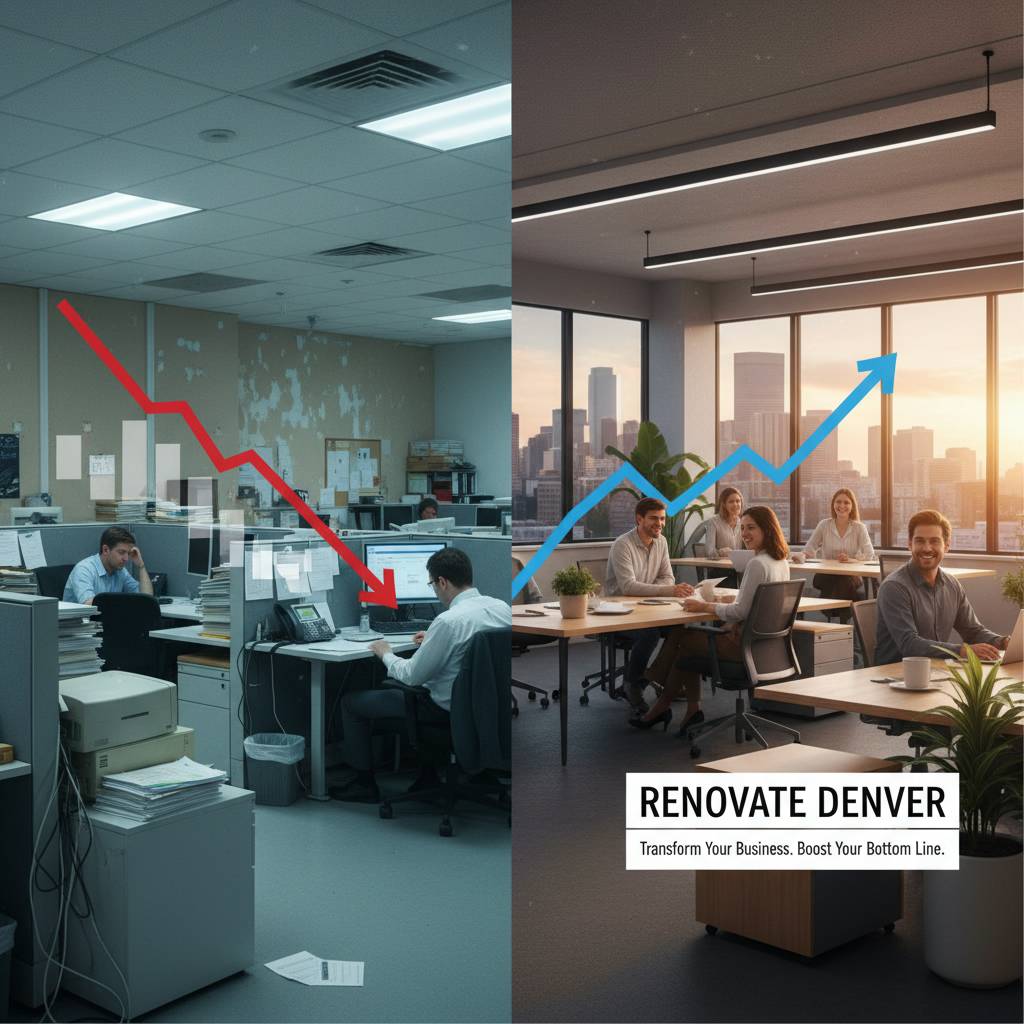
There are several direct pathways by which poor workplace design reduces revenue. Slow workflows increase cycle time for tasks like order fulfillment, customer service, or production, which reduces the number of transactions or completed jobs in a shift. Confusing layouts create friction in the customer journey, lowering conversion rates and average transaction value. Even small inefficiencies add up: a few lost minutes per employee per day translates into significant labor cost overruns over a month.
Hidden impacts are just as damaging. High noise levels and visual distractions increase cognitive load and error rates, which leads to rework, returns, or customer complaints. Poor circulation and lack of clear wayfinding cause missed appointments or abandoned sales. When employees perceive the environment as inefficient or unsafe, turnover rises-and recruiting and training replacements erode margins. Understanding these mechanisms is essential to crafting redesigns that return value, not just aesthetics.
Finally, workplace design influences brand perception. Customers and partners judge professionalism based on the environment; cluttered service desks or poorly lit showrooms can undermine trust and reduce repeat business. By aligning layout decisions with sales and operational targets, organizations turn design from a cost center into a strategic lever for revenue growth.
Diagnosing layout issues: metrics, observations, and quick audits
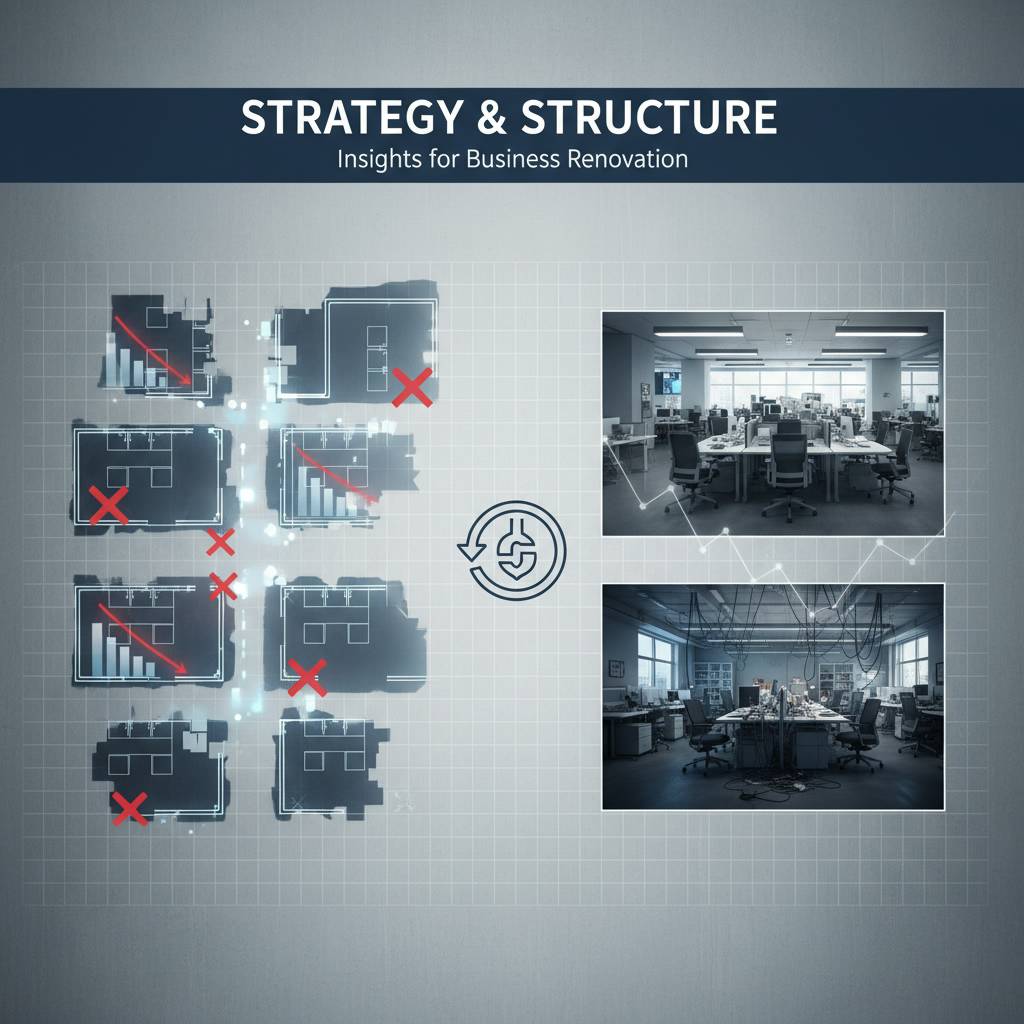 A useful diagnosis starts with measurable questions: where are delays happening, how long do customers wait, what percentage of tasks require employees to walk more than X feet, and what is the error rate tied to specific zones? We recommend a mixed-method audit combining time-and-motion studies, employee interviews, customer journey mapping, and sensor or log data where available. This process surfaces bottlenecks and quantifies their impact on service levels, throughput, and sales.
Key operational metrics to track during diagnosis include cycle time per task, first-contact resolution rates, average transaction value, occupancy and density by zone, and employee walking distance per shift. Qualitative inputs-like frequency of interruptions, lines of sight to critical equipment, and employee-reported pain points-help interpret the numbers. Together, these data create a prioritized list of design failures and estimated revenue impact for each.
Practical diagnostic tools include short observational sprints (4872 hours), simple heatmaps of movement patterns, customer abandonment timing, and checklists for safety and accessibility. These lightweight methods keep costs down while providing actionable insight. In many engagements we find that a handful of targeted fixes produce the majority of measurable benefit, which helps justify the investment to leadership.
Evidence-based redesign strategies that increase productivity and sales
Successful redesigns are evidence-based: they address the specific bottlenecks revealed by diagnostics and align with business objectives such as conversion rate, throughput, or average order value. Common high-impact strategies include simplifying circulation to reduce travel time, creating dedicated zones for focused work to reduce interruptions, and redesigning customer pathways to encourage higher-value interactions. Each solution is tied to expected operational improvements and measurable KPIs.
Ergonomics and workstation layout often yield quick wins. Reorganizing tools and screens to reduce reach and head-turning can cut task time and error rates. In retail or service environments, placing high-margin items in the natural sightline of customers and optimizing queue layouts for perceived and actual wait time can increase sales. Lighting and acoustics improvements raise perceived quality and employee comfort, which supports better customer interactions and reduces mistakes.
Flow and wayfinding
Clear, intuitive circulation reduces hesitation and missteps. Rearranging aisles, repositioning service counters, and adding visible signage address friction in customer journeys. For workplaces with material or parts movement, dedicated one-way paths or staging areas reduce cross-traffic and handling time. Wayfinding is especially valuable in large facilities where a few directional cues can substantially reduce lost time and improve the customer experience.
Acoustics, lighting, and visual layout
Noise reduction strategies-such as zoning, absorptive materials, and quiet work rooms-improve concentration and reduce errors. Upgraded lighting increases alertness and reduces visual fatigue; it also improves product presentation. Visual layout choices, such as using color contrast to indicate zones and uncluttered sightlines to core service points, lower cognitive load and speed decision-making for both staff and customers.
Cost estimates, prioritization, and expected ROI
Every project begins with a cost-benefit conversation. Small to medium redesigns frequently fall in the $75-$200 per workstation range for ergonomic and layout improvements, while more extensive remodels or fit-outs may run higher depending on finishes, custom furniture, and systems changes. We prioritize interventions by expected ROI-changes that reduce cycle time, increase conversion, or lower turnover come first because they produce measurable revenue or cost savings quickly.
Prioritization should consider both hard and soft benefits: direct labor-hour savings, reduced rework, and higher sales per customer are measurable, while improved morale and brand perception are valuable but less tangible. We provide simple payback estimates showing months-to-payback based on conservative revenue improvements and labor savings so leadership can make informed decisions.
| Problem | Operational Impact | Quick Fix |
|---|---|---|
| Convoluted customer flow | Lower conversion; longer perceived wait | Redesign queue, add clear signage, reposition displays |
| Excessive employee walking | Lower productive time; fatigue | Reconfigure work zones, centralize supplies |
| High noise and interruptions | Increased errors; slower task completion | Create quiet zones, install absorptive materials |
Practical implementation roadmap and measurement plan
 Implementation is staged to deliver value early and limit disruption. A typical roadmap includes a short discovery phase (24 weeks), a prioritized design and prototyping phase (48 weeks), a pilot in a single zone to validate assumptions (26 weeks), and a phased roll-out with training and measurement. Piloting allows you to test design hypotheses, refine solutions, and quantify improvements before committing to larger investments.
Measurement is integral, not optional. We set baseline KPIs during diagnosis and monitor the same metrics post-implementation: task cycle times, error rates, conversion, dwell time, and employee satisfaction scores. Continuous measurement supports iterative improvements-small tweaks after roll-out often yield additional gains. We deliver dashboards and simple scorecards so stakeholders can see the connection between design changes and business outcomes.
Change management is equally important: engage employees early, use ambassadors in pilot zones, and document new standard operating procedures that align with the redesigned space. Training helps staff adopt more efficient behaviors, which ensures the physical changes translate into sustained operational improvement rather than a temporary boost.
Real examples: case studies of measurable improvement
In one retail client engagement, a reorganized customer pathway and relocated point-of-sale stations reduced average queue time by 35% and increased add-on purchases by nearly 12% in the pilot store. The changes required minor fixture moves and new signage; the pilot paid for itself within three months. This example shows how addressing customer flow directly impacts sales without a full-scale renovation.
A manufacturing facility we worked with reduced non-value-added walking by re-siting workstations and centralizing supplies. The result was a 9% increase in throughput and a 14% reduction in reported musculoskeletal complaints. These operational gains translated into higher daily output and lower downtime related to fatigue and minor injuries-clear contributors to improved revenue and reduced costs.
Smaller service organizations have also seen large benefits: reconfiguring a shared service desk to reduce visual clutter and improve line of sight to waiting customers improved first-contact resolution from 72% to 84% and increased repeat bookings. In every case, success came from aligning spatial changes with specific operational metrics rather than relying on aesthetics alone.
Frequently asked questions and final considerations
How long until we see benefits? Many high-impact changes produce measurable results within weeks of piloting-especially those that reduce travel time, streamline queues, or improve visibility of high-margin items. Larger remodels may take several months to fully roll out, but staging the project ensures early wins and steady momentum.
What level of disruption should we expect? We design roll-outs to minimize disruption by phasing work during off-hours and piloting in low-risk zones first. Communication and employee involvement are key to keeping operations running smoothly while improvements are made. Our goal is to balance speed with operational continuity so revenue is not interrupted.
How do we budget for unknowns? Begin with a prioritized list of fixes: low-cost, high-impact changes fund the case for larger investments. We also recommend contingency reserves and performance-based milestones that link later investments to measured outcomes from early phases.
Call to action
If your team is seeing the symptoms-long waits, high errors, lost sales, or frustrated staff-don't let inefficient layout quietly erode revenue. Riley Riley Construction offers targeted diagnostics and evidence-based redesigns that tie directly to operational goals and measurable outcomes. Reach out to discuss a tailored audit and pilot program.
Contact us to schedule a complimentary consultation. Call 17207828897 to start a conversation about how design changes can improve revenue and operational performance.
We look forward to helping you turn space into a strategic asset. Contact Riley Riley Construction at 17207828897 to learn more and schedule an assessment.