
Hidden Renovation Expenses That Cut ROI
Unexpected expenses can quickly erode projected renovation ROI. Riley Riley Construction identifies potential hidden costs and plans contingencies. Call 17207828897 to run a line item review of your budget. We help owners set realistic reserves and expectations.
Renovation projects begin with optimistic projections and carefully calculated return-on-investment numbers, but too often the final accounting tells a different story. Hidden renovation expenses that cut ROI are the most common culprits: items that were overlooked during initial scopes, underestimated in price, or discovered only after work begins. Riley Riley Construction specializes in uncovering those costs early, helping owners preserve profit margins and keep schedules on track. For a focused line-item review, contact us at 17207828897.
Why hidden costs matter to property owners and investors
Even a single unexpected expense can reduce projected ROI significantly when margins are tight. Property owners often assume contingency percentages or soft cost allowances are sufficient, but many hidden items-such as structural surprises, code compliance upgrades, or asbestos remediation-tend to be both costly and time-consuming. The financial impact is not only the direct cost, but also related schedule delays, financing interest, and tenant disruption. Understanding the true risk profile of a renovation requires more than rough estimates; it requires a systematic review of every line item.
Beyond immediate dollars, hidden costs create decision friction: owners delay approvals, contractors pause work, and lenders may ask for additional draws. These delays ripple through cash flow projections and can change the investment thesis for a property. Capturing a realistic picture up front, including both likely and low-probability risks, helps align expectations and keeps stakeholders confident through execution. Riley Riley Construction brings practical experience to this process, pulling together financial, construction, and regulatory perspectives to produce a defensible budget.
Common hidden renovation expenses and where they show up
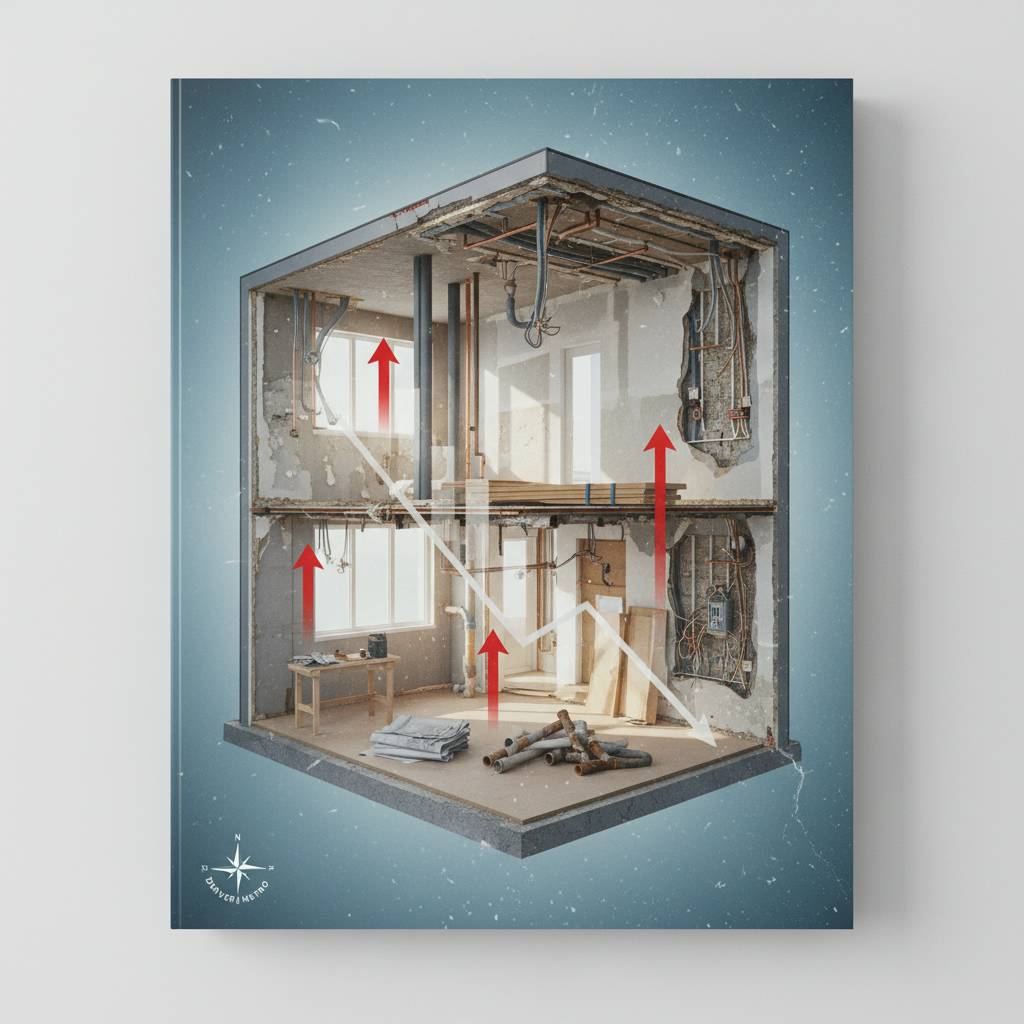 Hidden expenses tend to cluster in a few predictable categories: site conditions, code and permitting requirements, specialty trades, unforeseen repairs, and owner-driven scope changes. Understanding these categories helps prioritize investigative work before bidding and sets realistic contingencies. Many of these items are discoverable with targeted investigations-geotechnical reports, core samples, utility locates-or with an experienced review of existing drawings and prior work orders.
Below are common items that frequently erode budgets and ROI, with typical cost ranges so owners can get a sense of scale. These ranges are illustrative; a line-item review will produce more precise projections for your specific project.
| Expense Type | Typical Cost Range | Why it affects ROI |
|---|---|---|
| Structural repairs (framing, foundation) | $5,000-$75,000 | Often hidden behind finishes; delays and costly engineering required |
| Asbestos/lead remediation | $1,500-$50,000 | Regulated abatement adds cost and schedule constraints |
| Mold/moisture mitigation | $1,000-$30,000 | May require wall removal and drying; can be recurring if not resolved |
| Code upgrades and accessibility | $2,000-$40,000 | Local codes can force scope changes or added systems (sprinklers, elevators) |
| Utility relocations or upgrades | $750-$25,000 | Underground conflicts or inadequate service capacity require work |
How Riley Riley Construction identifies and quantifies hidden costs
Our approach begins with a structured line-item review that examines every category of cost rather than relying on high-level allowances. We combine documentary review-existing plans, as-built drawings, maintenance records-with targeted physical inspections. This process often reveals items that standard estimates miss, such as patchwork repairs that mask deeper issues or inconsistent materials that complicate finishes. Quantifying costs requires conservative, data-driven assumptions and vendor-validated pricing to avoid surprises.
We also model secondary impacts: schedule extensions that increase general conditions, financing interest that accrues during delays, and potential loss of rental income. By turning these into dollar-line items instead of vague risks, owners can see exactly how a hidden expense affects net yield. When appropriate, we recommend pre-emptive investigations-sample testing, selective demolition, and specialized consultants-to convert unknowns into priced contingencies and reduce the chance of costly mid-project discoveries.
Practical steps to reduce the likelihood and impact of hidden expenses
Mitigating hidden renovation expenses that cut ROI is both an art and a process. Start with quality pre-construction due diligence and establish a budget that separates known costs from contingencies. Key steps include hiring a qualified estimator early, performing targeted destructive testing in areas of concern, verifying utility capacities and easements, and reviewing local code enforcement history. These actions reduce the probability of major surprises entering the schedule and give owners a defensible reserve strategy.
Another important practice is to build contingency hierarchies: smaller contingencies for predictable scope items and larger, clearly labeled reserves for unknowns. This facilitates transparent decision-making during construction because change orders are tied to predefined buckets rather than ad hoc negotiations. Finally, ensure contract language allocates risk appropriately between owner and contractor, and consider cost-plus or guaranteed maximum price (GMP) arrangements when they improve clarity and accountability for hidden conditions.
Suggested contingency structure
- Design contingency: 5%-10% for scope refinement during design
- Construction contingency: 5%-15% for unforeseeable conditions discovered during construction
- Owner reserve: 2%-5% for discretionary scope changes or tenant upgrades
These percentages are starting points; actual recommendations depend on project complexity, age of the building, and local market volatility.
Line-item review: a step-by-step process
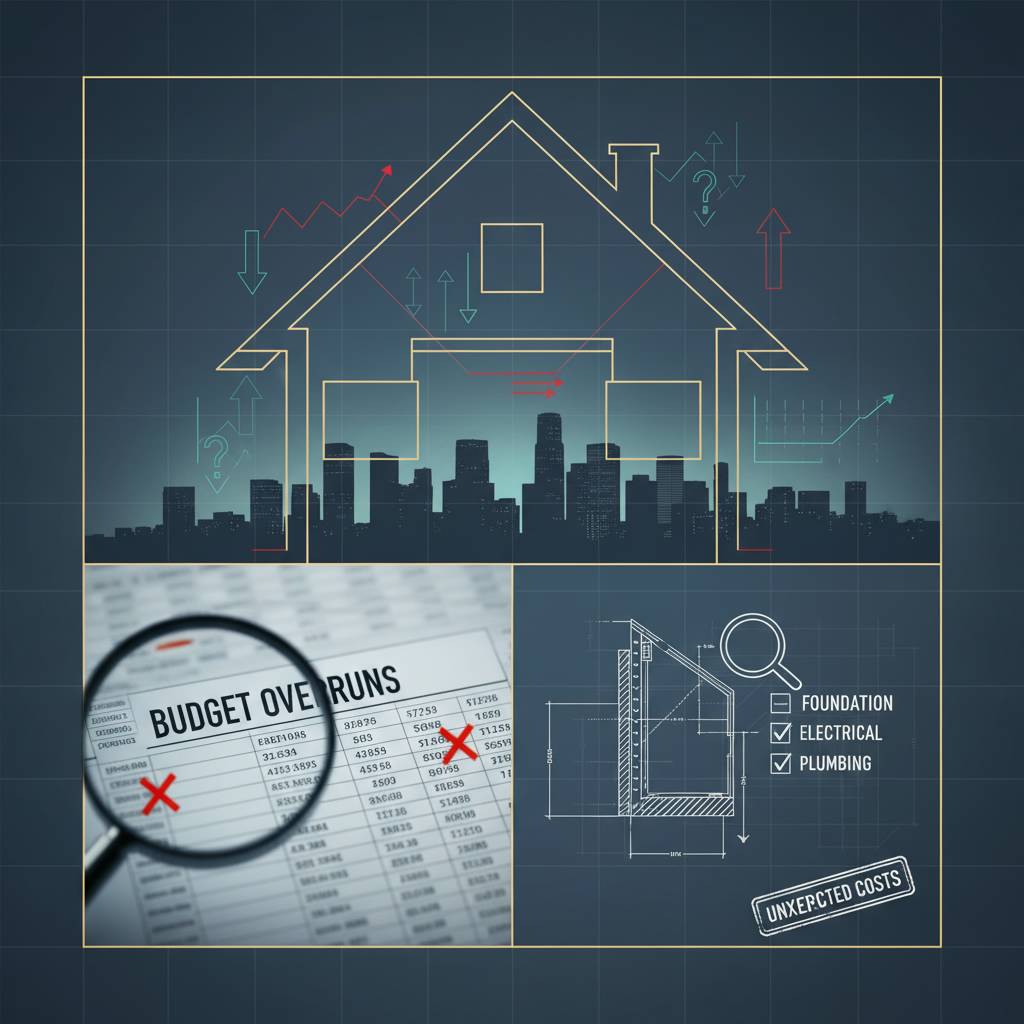 A disciplined line-item review turns a rough budget into an actionable financial plan. The review should be broken into phases: initial budget validation, focused investigations, contractor bids calibrated to the refined scope, and a final budget with categorized contingencies. Each phase reduces uncertainty and improves the quality of price information, which in turn narrows the contingency range. Owners who follow this sequence typically experience fewer mid-project surprises and better protected ROI.
Key activities in a line-item review include reconciling historical operating and capital expense data, interviewing maintenance staff for recurring problem areas, and validating vendor takeoffs for accuracy. The goal is to produce a budget where each line item has an identified source and a responsible party for cost control. Riley Riley Construction facilitates this process, coordinating third-party specialists, synthesizing findings into an actionable budget, and recommending risk transfer strategies where appropriate.
Case study: how uncovering one hidden cost preserved ROI
In one mid-size apartment renovation, initial budgets estimated unit-level cosmetic updates with a moderate contingency. During selective demolition we discovered widespread subfloor rot in two buildings, a condition not visible in the original walkthroughs. The unanticipated remediation presented a potential $85,000 exposure and a six-week schedule delay. Instead of reacting ad hoc, the owner engaged Riley Riley Construction for an immediate line-item review and market-tested subcontractor bids.
By isolating the structural scope, procuring a focused structural contractor, and reallocating a portion of the construction contingency, the owner completed repairs in a staged approach that limited tenant displacement and reduced overtime costs. The transparent accounting and reallocation approach also facilitated an approved loan draw for remediation. The result: a net reduction in expected ROI erosion compared to worst-case forecasts and preservation of the project's overall investment thesis.
Tools, templates, and negotiation tactics owners should use
Owners benefit from tools that standardize cost validation and change management. Good templates include a master budget with coded line items, a change order register, and a risk log with probability-weighted cost estimates. Leveraging these documents during contractor negotiations puts owners on firmer ground when discussing allowances, unit pricing, and responsibility for unforeseen conditions. Additionally, requesting bundled pricing for common unknowns-like drywall replacement or selective asbestos handling-often yields more reliable bids than empty allowances.
Negotiation tactics that protect ROI include insisting on unit pricing for common repair items, requiring subcontractor disclosure, and including time-and-materials caps for clearly defined risk areas. Where possible, ask contractors to also bid a sealed contingency reduction: if they can credibly reduce the contingency after additional site investigation, that reduction becomes owner savings. These contractual levers create alignment between price certainty and contractor incentive to minimize surprises.
Sample checklist for the initial review
- Verify site utilities and service capacity
- Run targeted destructive testing where suspect materials exist
- Obtain up-to-date code and permitting requirements
- Request historical maintenance and inspection records
- Collect competitive vendor quotes for specialty trades
Frequently asked questions
How large should my contingency be?
Contingency sizing depends on building age, condition, and the thoroughness of pre-construction investigations. For relatively new and well-documented buildings a combined contingency of 7%-10% may suffice. For older or poorly documented properties, 10%-20% is common. The key is to separate contingencies by purpose and to update them as unknowns become known, reducing speculative padding and preserving ROI transparency.
Can I insure against hidden renovation expenses?
Some exposures can be addressed with specific insurance or warranties, such as builder's risk or abatement insurance, but many hidden costs are excluded from standard policies. Insurance can sometimes cover sudden, accidental damage that reveals hidden issues, but it generally will not cover latent defects that were reasonably discoverable with due diligence. Therefore, insurance should complement-not replace-robust pre-construction investigation and a disciplined contingency strategy.
When should I engage a firm like Riley Riley Construction?
Engage early-ideally during feasibility and design development. Early involvement provides the greatest opportunity to identify risk, structure the budget appropriately, and advise on scope trade-offs that protect ROI. Even if you are already in construction, a targeted line-item review can still salvage margins by prioritizing remediation strategies and re-bidding specific packages to secure better pricing.
Next steps and how we can help
If you are preparing a renovation budget or facing unexpected cost escalation, a structured review can quickly quantify exposure and recommend actions. Riley Riley Construction offers a line-item review service that examines every cost category, identifies high-risk items, and produces an actionable contingency plan tailored to your project goals and risk appetite. We combine construction know-how with financial modeling to help owners protect returns without sacrificing quality.
To schedule a review or discuss a specific project, call us at 17207828897. A brief initial conversation lets us scope the work and recommend the most efficient next step, whether that is targeted testing, vendor solicitation, or a full budget reforecast. and our team are available to assist with both owner-directed projects and lender-mandated reviews.
Act now: hidden renovation expenses that cut ROI are easier to manage when identified early. Contact Riley Riley Construction today to turn unknown risks into priced decisions and protect your projected returns. Call 17207828897 to set up a line-item rundown and learn how we can help you set realistic reserves and expectations.