Common Commercial Property Issues Lowering Profits
Hidden property issues can erode profits over time. Riley Riley Construction conducts thorough inspections to identify costly defects. Call 17207828897 to schedule a risk assessment and cost plan. We present priority repairs that maximize return on remediation.
Why hidden defects quietly reduce your bottom line
Most commercial property owners focus on visible maintenance and tenant-facing upgrades, but hidden issues are the real profit drains. Unidentified structural problems, aging mechanical systems, or water intrusion can create ongoing expenses that compound over years: increased energy bills, higher insurance premiums, frequent emergency repairs, and lost rental income during remediation. A small leak left unattended can lead to mold and structural decay that forces expensive shutdowns, while deferred HVAC replacement can reduce tenant satisfaction and drive vacancies. Recognizing these risks early preserves operating income and capital value.
Financially, the impact of these defects is rarely linear. A modest repair today can prevent exponential costs later: permits, emergency contractors, tenant relocation, and reduced sale price when investors run due diligence. Beyond direct costs, hidden issues affect cash flow predictability and lender confidence. That increases financing costs and reduces bargaining power for refinancing or sale. By translating technical findings into clear financial implications, owners can make prioritized decisions that protect profit margins and preserve long-term asset value.
How Riley Riley Construction identifies and quantifies risk
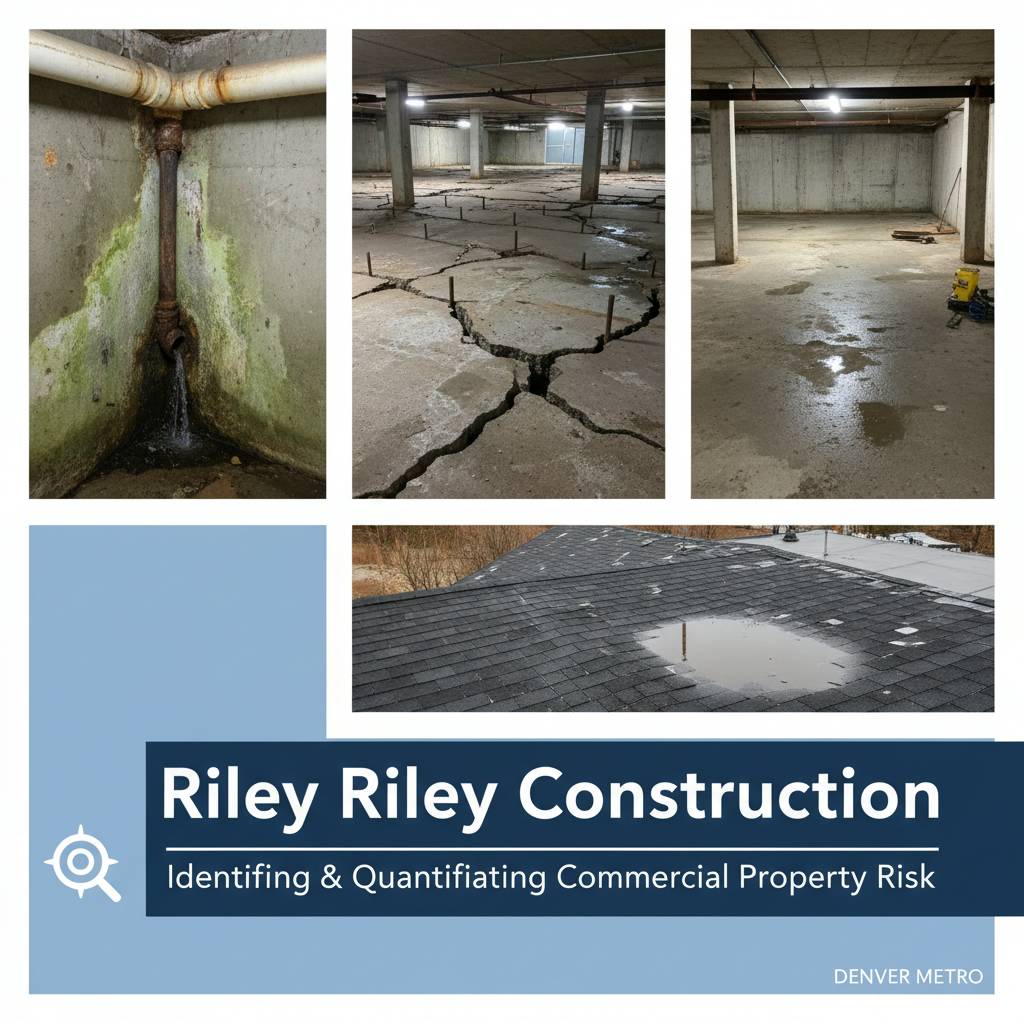 Riley Riley Construction applies a disciplined inspection methodology combining on-site assessment, systems testing, and documented reporting. Inspections begin with a walkthrough and high-resolution imaging, extend through mechanical and structural testing, and include targeted sampling when necessary. Our team integrates industry-standard diagnostic tools-thermal imaging, moisture meters, air quality sampling, and closed-circuit camera inspections-to reveal problems that are invisible to the naked eye. Every finding is categorized by severity and likely consequence, so you receive both technical context and business-oriented recommendations.
Deliverables from the assessment are designed to be actionable: a risk register, a prioritized repair list, estimated costs, and an implementation timeline aligned with your budget and occupancy constraints. Recommendations include short-term repairs that eliminate acute threats and longer-term capital projects that restore performance and extend equipment life. Where appropriate we provide options-repair, replace, monitor-so decision-makers can weigh cost vs. risk and choose interventions that maximize return on remediation.
Common commercial property issues lowering profits
Understanding the most frequent problem areas helps owners and managers recognize early warning signs. While every property is unique, several categories consistently show up during inspections and strongly correlate with reduced profitability. Addressing these common commercial property issues lowering profits requires targeted diagnostics and timely remediation to avoid compounding financial consequences.
- Roofing and flashing failures: Leaks create interior damage, mold, and potential structural decay, and often escalate repair costs if not caught early.
- HVAC inefficiency and failure: Poorly performing HVAC systems increase energy costs, reduce tenant comfort, and shorten equipment lifespan.
- Plumbing deterioration: Corroded pipes and hidden leaks lead to water damage, elevated water bills, and tenant disruptions.
- Building envelope issues: Faulty insulation, windows, and seals cause heat loss, condensation issues, and higher utility expenses.
- Electrical and life-safety system vulnerabilities: Outdated panels, overloaded circuits, and noncompliant fire protection systems can create operational risk and insurance challenges.
- Site drainage and grading defects: Poor grading redirects water toward foundations, accelerating foundation problems and basement flooding.
- Deferred maintenance backlog: Small deferred tasks accumulate into large capital expenditures and increased tenant turnover.
Addressing these issues proactively reduces surprise capital demands and protects net operating income. Inspections help differentiate low-risk cosmetic issues from system failures that require immediate attention, enabling cost-effective resource allocation based on real risk and return.
Prioritizing repairs to maximize return on remediation
Not every repair generates equal financial benefit. Riley Riley Construction prioritizes projects by combining three lenses: risk to operations, cost to remediate, and expected return on investment (ROI) through lower operating costs or improved lease rates. This prioritization ensures capital is applied where it stabilizes cash flow most effectively. For example, replacing a leaking roof that threatens tenant spaces and electrical systems typically outranks cosmetic upgrades because it prevents revenue loss and larger downstream expenses.
Decision framework
Our decision framework assigns each recommended action into one of three categories: critical (immediate), tactical (within 6-18 months), and strategic (longer-term capital planning). Critical items mitigate imminent safety or business interruption risks. Tactical items restore system efficiency and tenant satisfaction. Strategic items align with long-term asset repositioning or major capital renewal cycles. This approach creates a clear roadmap for phased investment, which improves predictability and enables financing alignment or staged contractor scheduling.
Where appropriate we include alternative approaches-phased repairs, temporary mitigations, or monitoring plans-so you can match the remediation schedule to budget constraints without accepting uncontrolled risk. Prioritization also helps when negotiating tenant reimbursement, insurance claims, or capital contributions by stakeholders because you can show documented evidence and a financially grounded plan.
Cost planning and typical price ranges
 Transparent cost estimates are essential to choosing the most cost-effective path forward. Riley Riley Construction provides itemized cost ranges and budget scenarios that reflect local labor rates, material costs, and typical project complexity. Below is an illustrative table to frame expected order-of-magnitude expenses for common repairs. These ranges are intended to guide planning; actual costs will vary by property size, access, and site-specific conditions identified during inspection.
| Repair Category | Typical Price Range | Primary Benefit |
|---|---|---|
| Localized roof patch and flashing | $500-$5,000 | Stops active leaks and prevents interior damage |
| Full roof replacement (commercial) | $10,000-$150,000 | Extends life of building and reduces insurance risk |
| HVAC zone repair or replacement | $2,000-$50,000 | Improves energy efficiency and tenant comfort |
| Plumbing mainline and fixture repairs | $75-$200 per fixture; $1,000-$25,000 for mainline work | Stops leaks and reduces water waste and damage |
| Electrical panel upgrade | $1,000-$15,000 | Enhances safety and supports modern loads |
| Site drainage and grading improvements | $2,000-$40,000 | Protects foundations and reduces flood risk |
When you review these figures alongside operational impact, the choice often becomes clear: small investments to address critical failures usually offer the highest immediate ROI by preventing revenue interruptions and further deterioration. Riley Riley Construction can tailor these numbers to your property and provide firm bids when you decide to proceed.
Case studies: measurable outcomes from targeted remediation
Real-world examples illustrate how disciplined inspection and prioritized remediation convert into financial performance. In one industrial asset, a thorough inspection uncovered concealed roof membrane failures and insulation gaps that were driving high energy costs and tenant complaints. By scheduling a phased roof replacement and targeted insulation upgrades, the owner reduced energy use by an estimated 18% and avoided a potential tenant loss. Repairs were staged to align with tenant schedules, minimizing vacancy time and preserving cash flow during construction.
Another office asset presented recurring plumbing emergencies and tenant claims. Riley Riley Construction documented corrosion in concealed piping and recommended selective repiping and modern fixtures. The owner pursued tactical replacement combined with a monitoring program, cutting emergency callouts by over 80% within the first year. Savings came from lower water bills, fewer tenant concessions, and improved lease renewals-demonstrating how strategic remediation yields both direct and indirect financial gains. was involved in coordinating tenant communications during that project.
Get a risk assessment and cost plan that protects profit
Deciding where to spend capital is easier when you have clear evidence and a prioritized plan. A professional assessment from Riley Riley Construction delivers the facts, quantifies the financial implications of defects, and lays out remediation sequences that protect net operating income. Whether you own a single property or a portfolio, our inspectors tailor recommendations to your operational goals-minimizing disruption while addressing the issues most likely to erode profits over time.
To move forward, call 17207828897 to schedule an on-site inspection and risk consultation. We will provide a concise report with a prioritized repair plan, line-item cost estimates, and a timeline that aligns with your budget and tenant commitments. Early intervention is almost always less expensive than deferred replacement, and having a defensible plan supports financing and stakeholder decision-making.
Act now to identify the problems that quietly lower returns. Contact Riley Riley Construction at 17207828897 for a practical, financially focused assessment tailored to your commercial property. Our goal is to protect your income and maximize the return on every remediation dollar you invest.